


Walk through almost any modern processing plant and you will find polypropylene (PP) quietly doing heavy lifting—literally and figuratively. From chemical containment trays to conveyor wear strips, PP sheet has become one of the most specified thermoplastics in industrial fabrication. But while the material itself is well understood, the role of PP sheet manufacturers is evolving in ways that plant engineers and maintenance teams are only now beginning to appreciate.
Based on conversations with fabricators, maintenance supervisors, and procurement teams across chemical processing, food handling, and wastewater treatment facilities, several patterns stand out.
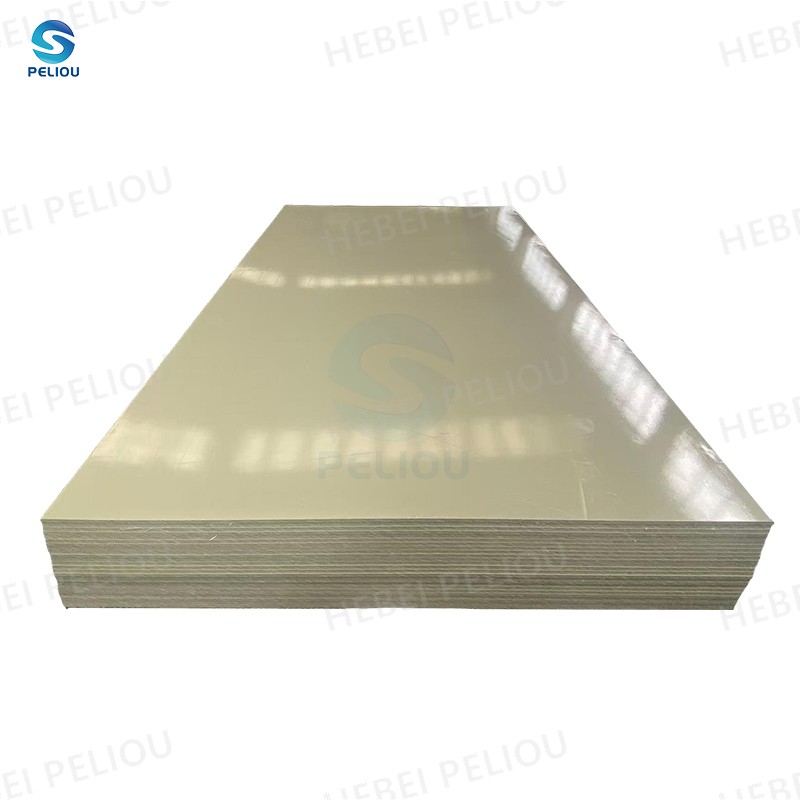
A decade ago, most industrial buyers treated PP sheet as a catalog item: specify a thickness, pick a color, place an order. Today, manufacturers report that a growing share of inquiries begin with a problem statement rather than a product code.
"We're less often asked 'what's your price for 10mm natural PP sheet' and more often asked 'we have a tank bund that keeps cracking—what do you recommend?'" one manufacturer noted.
This shift has pushed leading PP sheet producers to build in-house application engineering teams and to publish detailed chemical resistance and temperature performance data. The manufacturers that stand out in industrial accounts are those that can advise on weldability, stress relief, and thermal expansion allowances—not just ship pallets.
Unsurprisingly, chemical processing and storage remain the largest industrial demand drivers. PP sheet's resistance to acids, bases, and many solvents makes it a default choice for:
Secondary containment and bund liners in tank farms and dosing areas
Fume hood liners and wet bench surfaces in laboratories
Pickling and plating tank linings in metal finishing operations
Ductwork and scrubber components in exhaust treatment systems
What has changed, according to manufacturers, is the level of documentation expected. Industrial buyers increasingly request batch-level material certificates, resin origin data, and third-party test reports. Manufacturers that have invested in traceability systems report fewer disputes and stronger repeat business.
In food processing and pharmaceutical environments, PP sheet manufacturers are seeing demand split into a distinct "hygienic" product tier. Key observations:
Color coding is now standard practice. Cutting boards, wall cladding, and equipment guards are increasingly specified in HACCP-aligned color schemes (e.g., blue for raw handling, white for ready-to-eat zones).
Surface finish matters more than ever. Fabricators report growing preference for sheet with consistent, non-porous surfaces that resist bacterial harborage and clean down easily.
Compliance documentation is a differentiator. Manufacturers able to supply FDA-compliant and EU 10/2011 declarations, along with migration test data, are winning accounts that commodity suppliers cannot serve.
One maintenance manager at a dairy facility put it simply: "The sheet itself is cheap compared to a recall. We buy from whoever can prove the paperwork."
Perhaps the most consistent growth signal from manufacturers is in wastewater treatment and environmental engineering. PP sheet is being specified for:
Clarifier and settling tank covers
Odor control ducting and scrubber housings
Chemical dosing stations and polymer make-down tanks
Leachate containment in landfill applications
Manufacturers note that this segment rewards suppliers who understand large-format fabrication—thickness consistency across 2m+ sheets, flatness tolerances, and hot-gas or extrusion welding compatibility. Sheet that warps or varies in gauge creates headaches for fabricators building large welded assemblies, and word travels fast in this relatively small industry.
PP sheet manufacturers are watching two competing pressures:
From above: Higher-performance materials (PVDF, PPS, and specialty composites) are encroaching on high-temperature or aggressive-chemical niches where PP's service ceiling (typically around 90–100°C continuous, depending on grade) is a limitation.
From below: Cheaper alternatives—including recycled-content PP and HDPE in less demanding applications—are competing on price.
The manufacturers holding their ground tend to compete on consistency and fabrication reliability rather than on price per kilogram. As one fabricator observed, "A sheet that welds predictably saves us more money than a cheap sheet ever will."


