


If you’ve ever watched artistic roller skating—with its graceful spins, elegant footwork, and precise jumps—you know it demands a specialized surface. The floor must offer the right balance of grip and glide, allowing skaters to execute intricate maneuvers with confidence. So when synthetic ice rink flooring enters the conversation, a natural question arises: is this surface, designed to mimic real ice, suitable for the art of roller skating?
The short answer is yes, but with important considerations. Let’s break down what makes synthetic ice work for artistic roller skating and what you need to know before investing.
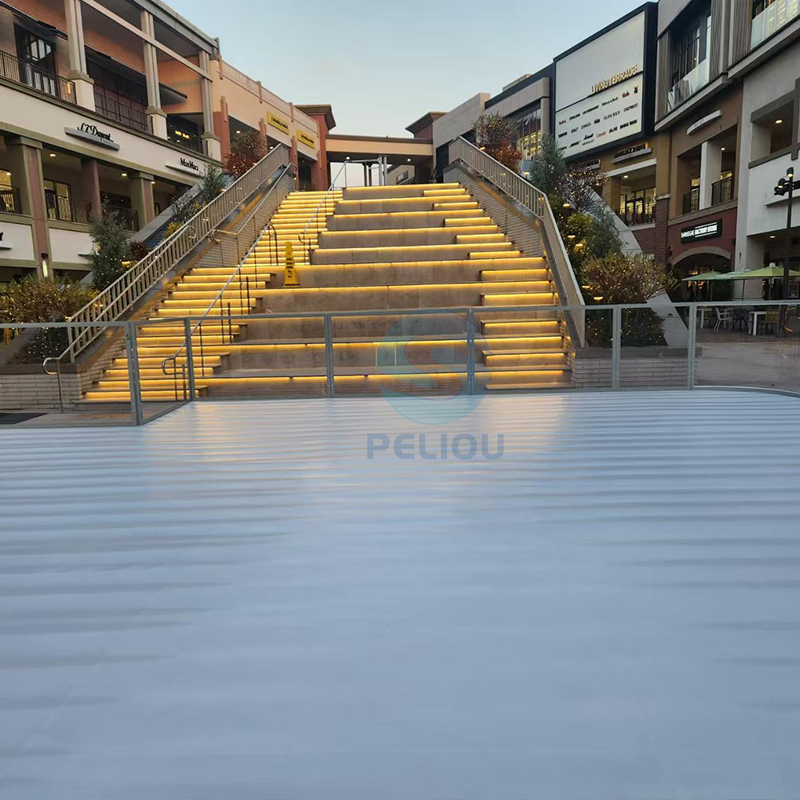
Synthetic ice is typically made from engineered plastics—most commonly Ultra-High Molecular Weight Polyethylene (UHMWPE). These materials are formulated with self-lubricating properties to reduce friction, allowing ice skates to glide similarly to how they would on natural ice.
Manufacturers design these panels for year-round use, with weather resistance and durability that outperform traditional rink surfaces. The technology has advanced significantly in recent years, with some high-quality synthetic ice now replicating over 90% of the glide of real ice.
Artistic roller skating traditionally takes place on hard, smooth surfaces like polished concrete, wood parquet, or specialized sport flooring. These surfaces provide:
Consistent grip for edge work and turns
Predictable slide for spins and stops
Impact absorption (in the case of wood) for jumps
Synthetic ice, by contrast, is designed to be more slippery—closer to actual ice. According to a patent for combined roller and ice skates, synthetic surfaces have a coefficient of friction that falls between wood-type materials and ice. This means it’s slicker than a traditional roller rink floor.


