


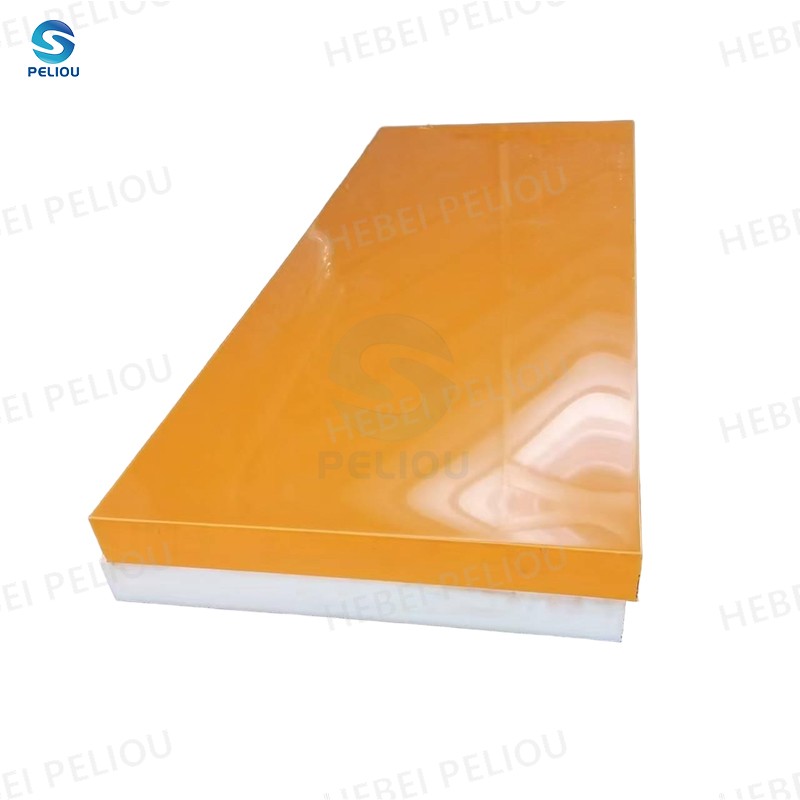
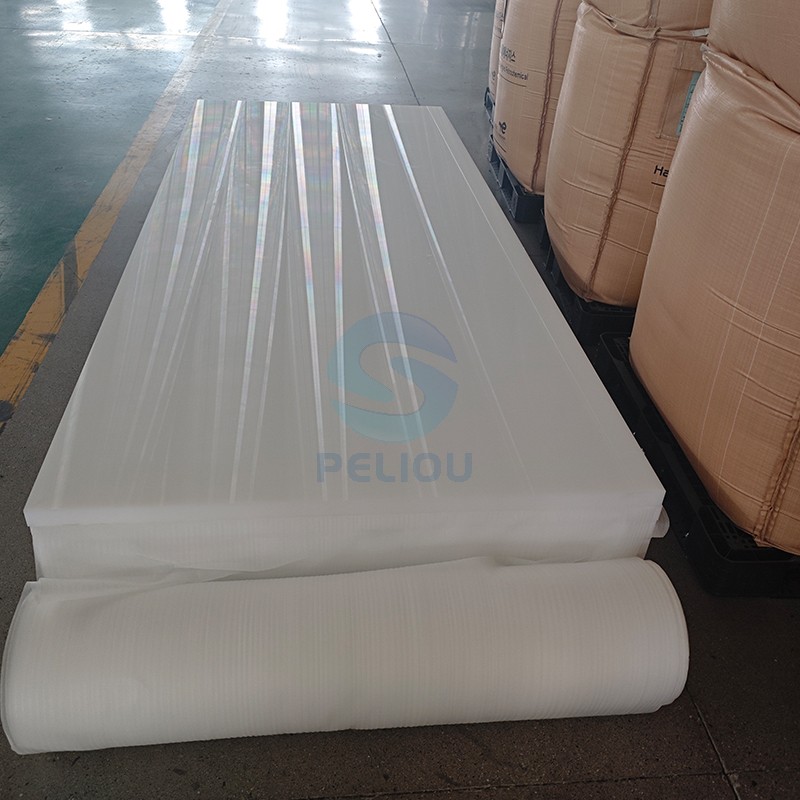
FDA grade UHMWPE sheet (Ultra High Molecular Weight Polyethylene sheet) is a high-performance engineering plastic option for selected food processing applications. It combines excellent wear resistance, low friction, impact strength, low moisture absorption, and good chemical resistance.
For food manufacturers, equipment manufacturers, distributors, and industrial procurement professionals, choosing the right food contact plastic can help improve equipment performance while supporting appropriate hygiene and regulatory requirements.
In this guide, we will explore what FDA grade UHMWPE sheet means, its key specifications, food processing applications, advantages, FDA compliance considerations, and how to select a suitable food grade UHMWPE sheet for your project.
UHMWPE stands for Ultra High Molecular Weight Polyethylene. It is a high-performance thermoplastic with exceptionally long polymer chains and excellent mechanical properties.
Compared with conventional polyethylene, UHMWPE offers outstanding abrasion resistance, high impact strength, a low coefficient of friction, and good resistance to many chemicals.
When UHMWPE is manufactured using suitable food-contact-compliant raw materials and formulations, it may be used in specific food processing applications, subject to the applicable regulatory requirements and intended conditions of use.
Food grade UHMWPE refers to UHMWPE material that is formulated and documented for suitable food contact applications.
Its suitability depends on factors such as:
For more product information, visit our UHMWPE Sheet product page.
For the US food processing market, food contact materials must meet applicable requirements established by the US Food and Drug Administration (FDA).
One important regulation for polyethylene materials is 21 CFR §177.1520 – Olefin Polymers.
This regulation describes conditions under which specified olefin polymers, including certain polyethylene materials, may be safely used in articles intended for food contact.
21 CFR §177.1520 establishes requirements relating to polymer identity, material specifications, extraction characteristics, and applicable conditions of use.
However, compliance must be evaluated against the specific polymer formulation and the intended food contact conditions. It should not be assumed that every UHMWPE grade automatically qualifies under this regulation.
When evaluating a food contact UHMWPE sheet, buyers should check the following:
Professional buyers should request documentation that identifies the actual product grade and its food contact suitability.
FDA does not issue a universal approval certificate for every plastic sheet product. A supplier's statement or general material certificate should not be treated as proof of compliance for all food contact conditions.
For regulatory reference, buyers can consult 21 CFR §177.1520 on the Electronic Code of Federal Regulations.
Food processing facilities require materials that can withstand repeated mechanical contact, frequent cleaning, moisture exposure, and continuous production operations.
Traditional materials may experience corrosion, excessive wear, surface damage, or increased maintenance requirements under certain operating conditions.
Food-contact-suitable UHMWPE offers several advantages that make it an attractive option for selected food processing equipment components.
UHMWPE has a naturally low coefficient of friction. This helps reduce resistance between contacting surfaces and supports smoother movement of products and equipment components.
Its excellent abrasion resistance makes UHMWPE suitable for components exposed to repeated sliding and mechanical contact.
UHMWPE has very low moisture absorption and good resistance to water, making it suitable for many wet processing environments when the selected grade and cleaning procedures are appropriate.
Durable UHMWPE components can help reduce wear-related replacement frequency and support more efficient equipment maintenance.
One of the main advantages of UHMWPE sheet is its outstanding resistance to abrasion.
In food processing equipment, conveyor guides, sliding components, and handling surfaces may experience continuous friction during production.
UHMWPE helps withstand repeated mechanical contact, making it suitable for wear strips, guide rails, conveyor components, and selected machine parts.
UHMWPE has a naturally slippery surface and a low coefficient of friction.
This characteristic can help food processing equipment components move smoothly while reducing friction between contacting surfaces.
It is particularly useful in conveyor systems, sliding guides, and material transfer equipment.
UHMWPE absorbs very little water under normal conditions.
This property helps the material maintain its physical characteristics in many humid and wet environments.
It is an important consideration for food processing facilities where water exposure and regular washing are part of daily operations.
UHMWPE offers good resistance to many acids, alkalis, and common industrial chemicals.
This makes it useful in selected food processing environments where equipment may be exposed to cleaning agents or other chemical substances.
However, chemical compatibility should always be checked against the actual concentration, temperature, and exposure time of the cleaning chemicals used.
UHMWPE is known for its excellent toughness and impact resistance.
It can withstand repeated mechanical impacts in many industrial applications, helping reduce damage to equipment components during normal operation.
UHMWPE combines low friction with high abrasion resistance, making it a practical choice for selected high-wear components.
When the material grade, component design, and operating conditions are properly matched, UHMWPE can help extend the service life of equipment parts.
With a typical density of approximately 0.93–0.94 g/cm³, UHMWPE is considerably lighter than many metal materials.
Its lightweight nature can make handling, installation, and replacement of equipment components easier.
UHMWPE sheets can be machined into various shapes and dimensions using appropriate equipment.
Depending on the application, they can be cut, drilled, milled, and fabricated into customized machine components.
When purchasing FDA grade UHMWPE sheet for food processing, technical specifications should be reviewed alongside food contact compliance documentation.
The following table provides general material characteristics and purchasing considerations. These are reference descriptions rather than guaranteed specifications for every grade.
| Specification | General Characteristics / Selection Considerations |
|---|---|
| Material | Ultra High Molecular Weight Polyethylene (UHMWPE) |
| Density | Typically approximately 0.93–0.94 g/cm³ |
| Color | Natural white is commonly available; other colors depend on compliant formulations |
| Surface | Smooth or customized machined finish |
| Abrasion Resistance | Excellent |
| Impact Resistance | Excellent |
| Coefficient of Friction | Low |
| Moisture Absorption | Very low |
| Chemical Resistance | Good resistance to many common chemicals |
| Food Contact Suitability | Must be verified for the specific material formulation and conditions of use |
| Processing | Cutting, drilling, milling, and machining |
| Dimensions | Standard or customized according to supplier capabilities |
UHMWPE sheet thickness should be selected according to the equipment design and application requirements.
For example:
There is no single thickness suitable for every food processing application. Buyers should provide drawings, dimensions, mechanical requirements, and operating conditions before selecting a product.
Food grade UHMWPE sheet can be used in different food processing applications where the selected grade satisfies applicable food contact requirements.
Conveyor systems are widely used in food manufacturing plants to transport products between different processing stages.
UHMWPE can be machined into:
Its low friction and abrasion resistance help support smooth conveyor operation.
Suitable food-contact UHMWPE grades can be used for selected cutting boards, chopping surfaces, and food preparation components.
They offer good impact resistance, low moisture absorption, and wear resistance.
Finished surfaces should be properly maintained and inspected. Damaged or deeply scored surfaces may require replacement according to the facility's hygiene procedures.
Meat and poultry processing equipment often requires durable plastic components that can withstand repeated mechanical contact and regular cleaning.
Food-contact-suitable UHMWPE may be used for selected cutting surfaces, guide components, sliding plates, and processing machine parts.
Dairy processing facilities use different conveyors, handling systems, and processing machines.
UHMWPE can be considered for selected non-heated equipment components where low friction, wear resistance, and moisture resistance are required.
Actual suitability must be verified against the dairy product, cleaning chemicals, temperature, and contact conditions.
Food packaging lines and bakery equipment use sliding components, guides, and product handling parts.
UHMWPE components can help reduce friction and mechanical wear in suitable machine designs.
Fruit and vegetable processing facilities frequently involve water exposure, washing, sorting, and transportation.
Food-contact-suitable UHMWPE components can be used in selected conveyor guides, sliding surfaces, and handling equipment.
UHMWPE can also be considered for selected food handling and storage equipment components where its mechanical properties and food contact compliance meet the intended application requirements.
UHMWPE, HDPE, and Nylon are all engineering plastics used in industrial equipment. However, they have different performance characteristics.
Understanding their differences helps food equipment manufacturers select a material that matches the application.
| Property | UHMWPE | HDPE | Nylon |
|---|---|---|---|
| Abrasion Resistance | Excellent | Good | Good to Excellent, depending on grade |
| Impact Resistance | Excellent | Good | Good to Excellent |
| Friction | Low | Moderate to Low | Generally Higher |
| Moisture Absorption | Very Low | Very Low | Higher |
| Dimensional Stability in Wet Conditions | Good | Good | Can be affected by moisture absorption |
| Food Contact Suitability | Depends on grade and compliance documentation | Depends on grade and compliance documentation | Depends on grade and compliance documentation |
| Common Applications | Wear strips, cutting surfaces, sliding components | General-purpose panels, guides, and equipment parts | Selected mechanical components and gears |
UHMWPE may be the preferred option when the application requires:
HDPE can be a practical option for general-purpose food processing equipment components when its material grade meets the required food contact conditions and exceptional wear resistance is not the main priority.
Nylon may be suitable for certain mechanical applications requiring stiffness and strength. However, its moisture absorption characteristics should be evaluated carefully in wet food processing environments.
Regardless of the polymer selected, food contact compliance must be confirmed for the exact grade and intended use.
For food processing equipment manufacturers, distributors, and procurement professionals, choosing a suitable plastic sheet involves more than comparing prices.
Several factors should be evaluated before placing an order.
Buyers should request documentation that identifies the actual resin grade, formulation, and applicable food contact conditions.
Consistent dimensions, surface quality, and material characteristics are important for equipment manufacturers and distributors who need reliable repeat orders.
The selected UHMWPE sheet should match the mechanical requirements of the application, including friction, impact, wear, and load conditions.
Food processing facilities may use different detergents, sanitizers, temperatures, and cleaning methods.
Buyers should verify chemical compatibility and ensure that the final component design supports effective cleaning.
Procurement teams should evaluate product price, machining costs, service life, maintenance, replacement frequency, and supply reliability.
A suitable material solution should provide dependable performance throughout its expected operating life.
Different food processing machines require different component dimensions, thicknesses, and shapes. Standard UHMWPE sheets may not always meet specific equipment requirements.
Customized UHMWPE sheet products can help equipment manufacturers obtain components that better match their designs.
When requesting a quotation, buyers can provide:
Providing these details helps suppliers evaluate the project and discuss a suitable material solution.
Selecting the right food grade UHMWPE sheet requires a combination of regulatory review, technical evaluation, and supplier assessment.
Identify the applicable regulations in your target market. For the United States, review the relevant FDA food contact provisions and verify that the specific material formulation and conditions of use are covered.
Determine whether the sheet will contact dry foods, aqueous foods, acidic foods, fatty foods, or other food categories.
Different food types may have different regulatory and material compatibility considerations.
Consider whether the component will operate under refrigeration, room temperature, elevated temperature, or repeated temperature changes.
Confirm whether the sheet will be exposed to detergents, sanitizers, hot water, or other cleaning chemicals.
Compare density, thickness, dimensions, wear resistance, impact performance, and surface finish against your equipment requirements.
Ask the supplier for the applicable food contact declaration, technical data, and supporting test reports for the exact material grade.
Choose a supplier that can provide clear product information, stable quality, customization options, and responsive technical communication.
FDA grade UHMWPE sheet is a UHMWPE material grade formulated and documented for specific food contact applications. Its compliance depends on the raw materials, additives, finished article, and intended conditions of use.
Not every UHMWPE material is automatically FDA compliant. Certain polyethylene formulations may qualify for food contact use under applicable FDA regulations, including 21 CFR §177.1520, when all relevant requirements and limitations are met. Buyers should verify the exact grade and application.
Yes. Suitable food-contact-compliant UHMWPE grades can be used for selected food processing components, including conveyor guides, wear strips, cutting surfaces, and sliding machine parts.
Suitable food contact UHMWPE grades can be used for cutting boards and food preparation surfaces. The finished surface should be maintained properly and inspected regularly to support hygiene requirements.
UHMWPE generally offers better abrasion resistance, impact performance, and lower friction than conventional HDPE. HDPE may be more economical for general-purpose applications. Both materials require grade-specific food contact verification.
UHMWPE has very low moisture absorption and good resistance to many chemicals. However, compatibility with specific detergents and sanitizers should be checked under the actual concentration, temperature, and exposure conditions.
Available thicknesses depend on the manufacturer's production capabilities and product specifications. Buyers can request standard or customized dimensions according to their application requirements.
Request a food contact compliance declaration, material identification, technical data sheet, and relevant supporting test reports. Confirm that the documentation covers the exact material grade and intended conditions of use.
Yes. Depending on manufacturing capabilities, UHMWPE sheets can be customized in dimensions, thickness, color, cutting, and machining. Any customized formulation or processing should retain the required food contact compliance.
Look for a supplier that provides clear material specifications, relevant compliance documentation, consistent product quality, customization support, and professional communication.
Finding the right plastic material supplier is an important part of building a reliable food processing equipment supply chain.
Hebei Peliou New Materials Technology Co., Ltd. provides engineering plastic material solutions for international industrial customers.
We understand that different equipment manufacturers, distributors, and industrial buyers have different requirements for material dimensions, thickness, colors, mechanical performance, and processing.
For customers interested in UHMWPE sheet products, we welcome inquiries regarding:
For food processing applications, please specify your intended food contact conditions so that the appropriate material grade and documentation can be evaluated before ordering.
Our team welcomes inquiries from food processing equipment manufacturers, industrial distributors, wholesalers, and international procurement professionals.
Are you sourcing UHMWPE plastic sheets for conveyor systems, food preparation equipment, cutting surfaces, or industrial food processing machinery?
Contact Hebei Peliou New Materials Technology Co., Ltd. to discuss your product specifications, material requirements, and customization needs.
Company: Hebei Peliou New Materials Technology Co., Ltd.
Email: info@plasticsuperior.com
When sending an inquiry, please include your required dimensions, thickness, application, and food contact requirements.
Send Your Inquiry: Request a Food Grade UHMWPE Sheet Quotation
We look forward to discussing your project requirements.


