1. Safety warnings and area zoning
This is the core function of the dual-color design. The combination of two high-contrast colors, typically internationally recognized safety warning colors, is used to quickly convey visual information.
Road and traffic safety facilities:
Road barrier/crash barrier panels: Commonly seen in yellow and black, red and white, or orange and white stripes, they are used in the median stripes or roadsides of highways, bridges, and tunnels to warn drivers of boundaries and hazardous areas.
Temporary roadblocks and construction fencing: In municipal engineering and road construction areas, dual-color boards can effectively attract attention and guide vehicular and pedestrian traffic around.
Parking lot bumper strips and corner guards: installed at corners, pillars, or edges of parking lots to protect walls from vehicle impacts and provide clear warnings to drivers.
Industrial and warehouse safety:
Floor area identification in the workshop: Different dual-color combinations are used to identify passageways (such as green and white), work areas, hazardous areas (such as yellow and black representing warnings), material areas, etc., to achieve 5S/6S on-site management.
Machine equipment protective panel: It is wrapped around the periphery of machine tools, production lines, or pillars in the factory building to prevent collisions from handling tools such as forklifts.
Shelf protective boards: installed at both ends of warehouse shelves to prevent damage to the shelves and goods during forklift operations.
Water safety:
Dock fender/collision board: installed at the dock apron to protect the dock structure and ships. The red and white or yellow and black stripes are extremely eye-catching on the water surface.
2. Signs and labels
Utilize the dual-color characteristic to create durable and clear logos.
Outdoor signage baseboard: One color serves as the background, while the other can be revealed through engraving or cutting to form text, patterns, or logos. For instance, a white and blue dual-color board can be engraved to remove the white layer, revealing the blue color, thus creating a sign with blue text. This type of signage is weather-resistant, does not fade, and requires no painting.
Floor index, house number, equipment label: Create durable and long-lasting signage systems in factories, parks, schools, and other locations.
3. Decorative and architectural applications
Utilize the easy processability and color durability of HDPE for applications that require both durability and aesthetics.
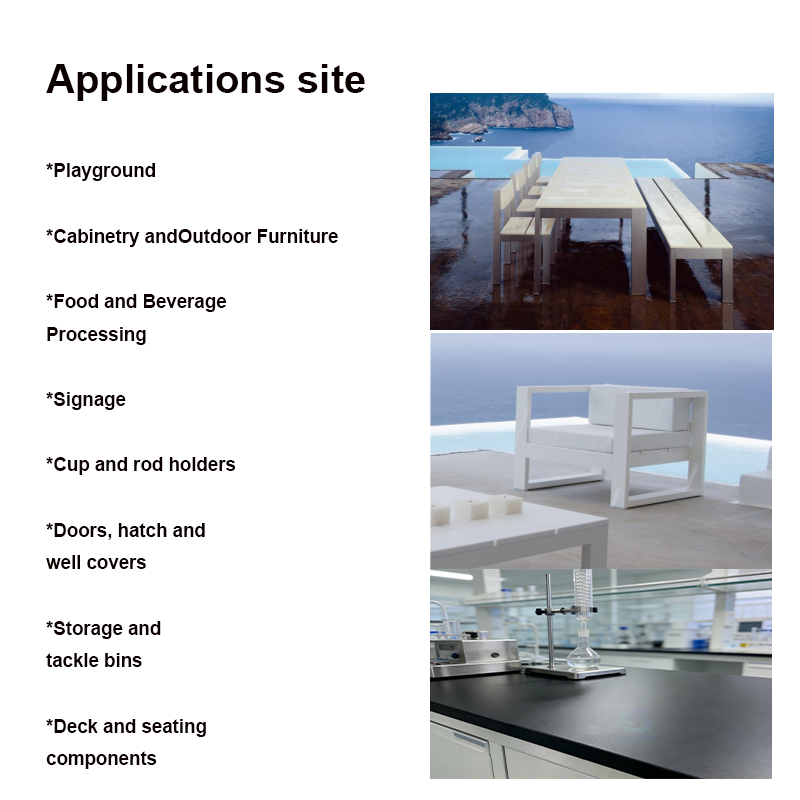
Outdoor furniture and decoration: such as park benches, flower boxes, fences, pavilion decorative panels, etc. A dual-color design (such as a combination of wood grain color and pure color) can enhance aesthetics.
Building exterior wall decorative panel: used for special architectural styling or wall decoration requiring lightweight, waterproof, and corrosion-resistant properties.
Playground facilities: Slides, protective panels for climbing walls, featuring bright colors and being safe and durable.
4. Special purpose
Food and fishery processing countertops: HDPE boards in specific colors (such as white/blue) meet hygiene standards, are easy to clean, resistant to corrosion, and can be used for workbenches, cutting boards, or seafood breeding tanks.
Advertising display boards and stands: Display materials that are lightweight, durable, and suitable for outdoor use are required.