


HDPE Road Mats (also commonly known as Poly Road Mats, Construction Mats, or Ground Protection Mats) are high-density polyethylene panels used to create temporary, stable, and protective roadways and working platforms over unstable or sensitive terrain.
Here is a detailed breakdown of their applications, benefits, and how they work:
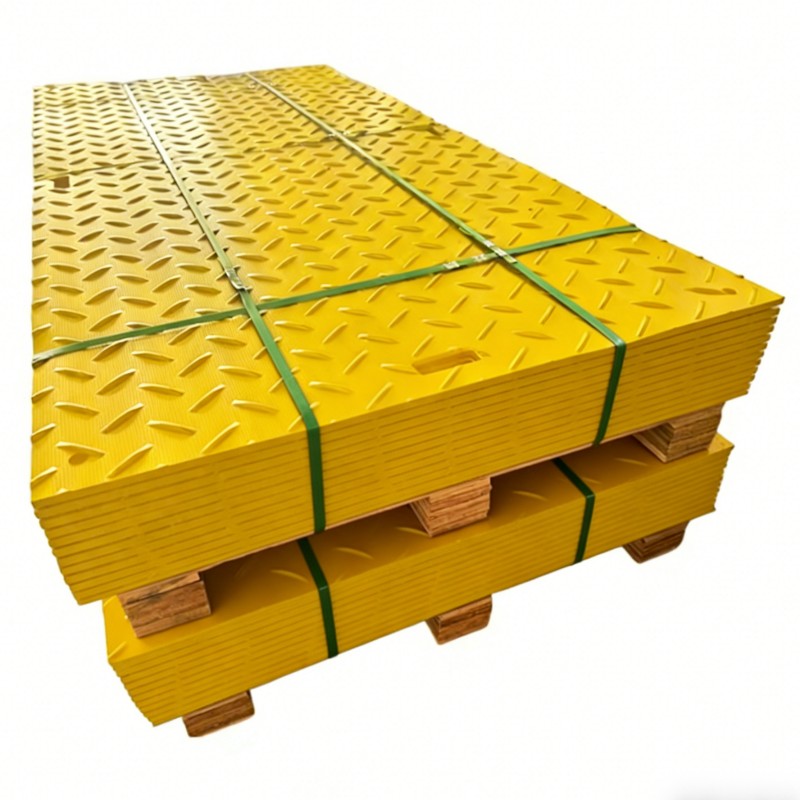
Primary Applications
The core function is to distribute heavy loads and protect the ground. They are indispensable in industries requiring temporary access over challenging ground conditions.
Event & Entertainment Industry:
Music Festivals, Concerts, Outdoor Events: Creating stable access roads and hard-standing areas for stages, heavy equipment (lighting rigs, sound systems), food trucks, and emergency vehicles over muddy or grassy fields.
Film & Television Production: Providing a stable base for camera cranes, generator trucks, and crew movement on location shoots in parks, beaches, or rural areas.
Construction & Civil Engineering:
Temporary Access Roads: For cranes, concrete trucks, piling rigs, and material delivery vehicles to reach the worksite across soft, wet, or uneven ground.
Crane & Heavy Equipment Pads: Creating a solid, level foundation for crane outriggers and heavy machinery to operate safely, preventing sinking and tilting.
Site Working Platforms: Providing a clean, stable, and mud-free surface for workers and materials in areas like landscaping, pipeline work, or foundation laying.
Utilities & Infrastructure Maintenance:
Pipeline & Cable Installation/Repair: Protecting the right-of-way and providing access for trenching equipment over farmland, lawns, or protected landscapes.
Telecom, Gas, Water Works: Minimizing disruption and ground damage when heavy service vehicles need to access roadside or off-road locations.
Environmental Protection & Sensitive Sites:
Wetland & Ecological Work: Creating a "floating" roadway that protects root systems, hydrology, and sensitive habitats from compaction and rutting by construction traffic.
Golf Courses & Sports Fields: Protecting turf from damage during tournament setup, maintenance, or special event construction.
Beach & Dune Restoration: Allowing equipment access while minimizing impact on the sand ecosystem.
Emergency & Disaster Response:
Quickly deploying stable pathways for rescue vehicles, generators, and supply trucks in flooded, muddy, or disaster-stricken areas.


