


Understanding PP Sheet Thickness Ranges
PP sheets are typically available from 1mm to 100mm, with practical categories based on real-world use:
| Thickness Range | Category | Primary Characteristics |
|---|---|---|
| 1–2mm | Thin Sheet | Flexible, lightweight, non-load-bearing |
| 3–6mm | Medium Sheet | Standard structural use, balanced properties |
| 8–10mm | Heavy Sheet | Load-bearing, high rigidity |
| 10–20mm | Thick Sheet | Industrial-grade, structural strength |
| 20–40mm+ | Extra Thick | Heavy fabrication, CNC machining blanks |
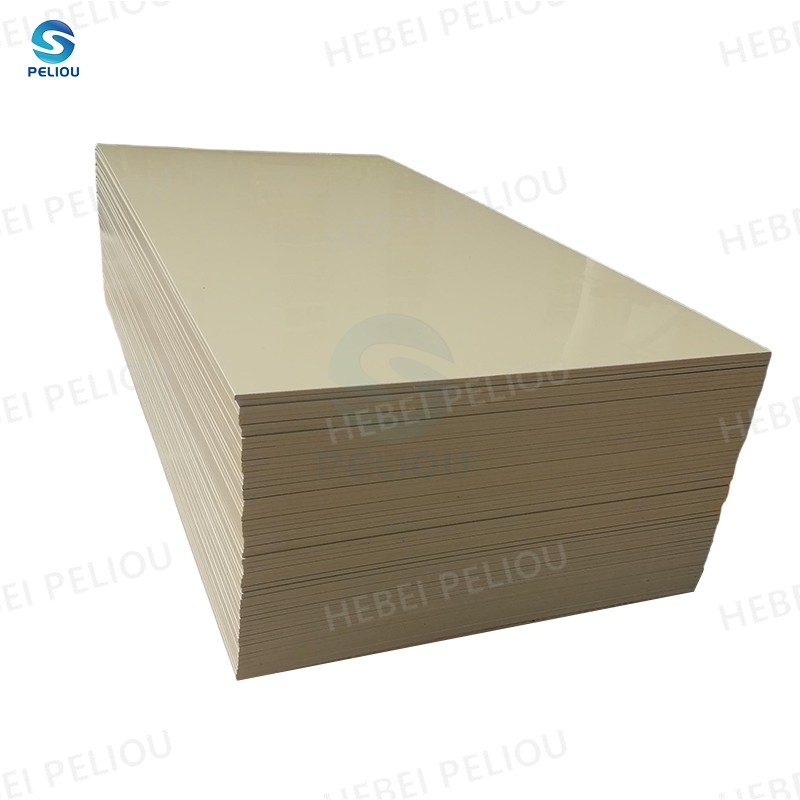
This range is ideal for applications requiring bending or wrapping rather than structural support.
Typical uses: Flexible packaging liners, non-load-bearing protective covers, separators between stacked goods, office stationery (folders, document covers)
Selection tip: Best when the sheet needs to conform to product shapes without adding bulk or weight
The most common range for general fabrication, balancing strength with machining convenience.
Typical uses: Equipment housings, corrosion-resistant liners, lab benchtops, fume hood partitions, acid/alkali-resistant work surfaces
Selection tip: Suitable for most standard acid- and alkali-resistant applications without requiring specialty modified materials
This thickness provides significant rigidity for parts that must withstand pressure and support weight.
Typical uses: Chemical equipment liners, tank linings, pipe supports, corrosion-resistant gaskets, structural components
Selection tip: For chemical processing applications, this range offers long-term chemical resistance and structural stability
Thick sheets are essential for applications where water pressure, weight loads, and temperature variations come into play.
Typical uses: Electroplating tanks, chemical storage tanks, sewage treatment equipment, wastewater scrubbers, industrial boards
Selection guidance by tank volume:
<1 m³ (small tanks): 8–12mm — e.g., lab cells, rinse tanks
1–5 m³ (medium tanks): 12–15mm — reinforcement ribs recommended
>5 m³ (large tanks): 15–20mm — external steel frame support required
These thick gauges serve as blanks for precision machining into complex parts.
Typical uses: CNC machining blanks for custom components, precision structural parts, heavy-duty fixtures, prosthetic components
Selection tip: When downstream machining is required, leave extra thickness for machining allowance and final dimensional requirements


