Table of Contents
- What Is Impact Resistant UHMWPE Sheet
- Core Advantages of UHMWPE for Heavy Duty Protection
- Limitations of UHMWPE Sheet in Heavy-Duty Scenarios
- UHMWPE vs HDPE, Nylon, POM and Steel for Impact Protection
- Common Industrial Applications for Impact Resistant UHMWPE Sheets
- Key Factors to Choose Qualified Impact Resistant UHMWPE
FAQs About Impact Resistant UHMWPE Sheet
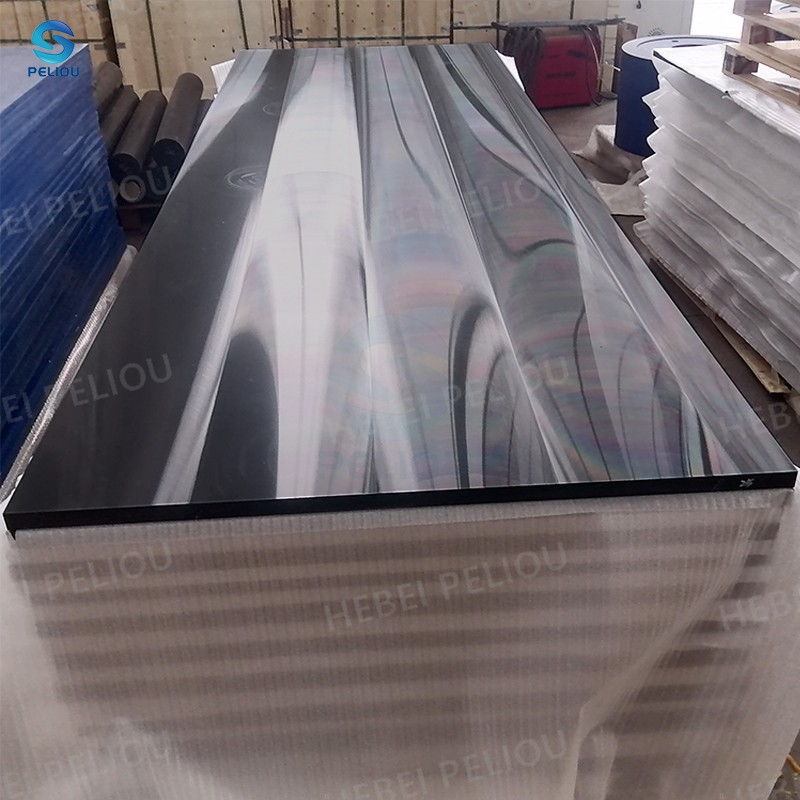
What Is Impact Resistant UHMWPE Sheet
Ultra-high molecular weight polyethylene (UHMWPE) is a special engineering plastic with molecular weight generally ranging from 3 million to 9 million g/mol. Impact resistant UHMWPE sheet refers to virgin or modified UHMW panels optimized to withstand repeated impact, shock load and heavy collision. Unlike many rigid plastics that crack or break under sudden impact, UHMWPE absorbs impact energy through its flexible molecular structure, without brittle fracture. This feature makes it widely considered for heavy-duty protection liners, bumpers and buffer parts across many industries.
Core Advantages of UHMWPE for Heavy Duty Protection
When used for heavy duty protection, impact resistant UHMWPE brings multiple practical benefits.
- Outstanding impact strength: It maintains good toughness even under low temperature conditions, far better than most rigid plastics.
- Excellent wear resistance: Combined impact and abrasion resistance extends service life for parts facing both collision and friction.
- Low friction coefficient: Self-lubricating surface prevents material sticking and reduces sliding resistance.
- Corrosion resistance: Resistant to most acids, alkalis and salt solutions, no rust like metal.
- Light weight: Much lighter than steel, easy to cut, install and replace on site.
- Custom modification options: Anti-static, flame retardant, UV stabilized grades can be produced for special working environments.
Limitations of UHMWPE Sheet in Heavy-Duty Scenarios
UHMWPE is great, but it is not a universal material for all heavy protection cases. It is important to understand its boundaries before selection.
- Low heat resistance: Continuous working temperature is generally below 80°C. It softens and loses impact performance under long-term high temperature.
- Low surface hardness: It can be scratched by sharp hard objects. Not suitable for scenarios with sharp piercing load.
- Creep tendency: Under long-term constant heavy static pressure, slow deformation may occur.
- Not suitable for high structural load: It cannot replace structural steel for load-bearing support. It works as protection liner, buffer layer, not structural component.
UHMWPE vs HDPE, Nylon, POM and Steel for Impact Protection
A simple comparison helps you judge whether it is the best choice for your project.
- VS HDPE: UHMWPE has much higher impact strength and abrasion resistance; HDPE is cheaper for light load protection.
- VS Nylon: Nylon has higher hardness and better tensile strength, but poorer low-temperature impact resistance and higher water absorption.
- VS POM: POM is rigid and wear-resistant, but brittle under strong impact and easy to crack.
- VS Steel: Steel has high hardness and high temperature resistance, heavy weight, easy to rust, high friction and noise. UHMWPE is quieter, lighter and corrosion-free.
Common Industrial Applications for Impact Resistant UHMWPE Sheets
Impact resistant UHMWPE sheets are widely used for heavy-duty protection in these fields.
- Mining and bulk material handling: Hopper liners, chute protection plates, transfer station buffer liners.
- Construction machinery: Outrigger pads, machinery buffer pads, wear protection blocks.
- Truck and trailer industry: Dump truck bed liners, side impact protection strips.
- Port and logistics: Dock fender panels, container buffer blocks, conveyor protection parts.
- Agricultural equipment: Silo liners, grain unloading buffer plates.
Key Factors to Choose Qualified Impact Resistant UHMWPE
If you decide to adopt UHMWPE for heavy protection, focus on these indicators when sourcing.
- Molecular weight: Higher molecular weight usually delivers better impact and abrasion performance for heavy duty use.
- Raw material: Virgin material performs much better than recycled blended material for impact resistance.
- Modification requirement: Confirm anti-static, flame retardant or UV resistance according to working environment.
- Thickness and size: Calculate impact load and reserved wear allowance to confirm proper thickness.
- Machining service: Check whether the supplier can provide CNC cutting, drilling, chamfering and prefabrication.
FAQs About Impact Resistant UHMWPE Sheet
Q: Is UHMWPE the best material for heavy impact protection?
A: It is one of the best options for impact + abrasion combined working conditions, especially where corrosion, noise and weight are concerns. If your application involves high temperature or sharp piercing impact, steel or other materials may be more suitable.
Q: Can impact resistant UHMWPE sheet work outdoors?
A: Standard UHMWPE will age under long strong UV exposure. Choose UV stabilized grade for outdoor continuous use.
Q: How long does UHMWPE protection liner last?
A: Service life depends on impact frequency, material load and working environment. Under proper conditions, it can outlast steel liners in many bulk handling scenarios.


